Gerrit Willem van Blaaderen
Gerrit Willem van Blaaderen (1873–1935): Painter of Landscape and Change
Gerrit Willem van Blaaderen is considered one of the most important Dutch artists of the early twentieth century. As a pioneer of the Bergen School, he gave new, powerful expression to the familiar Dutch landscape.
From Soft Impression to Strong Expression
His early work is rooted in Impressionism and influenced by the Larense School. During this period, he painted the Gooi region in light, soft, and dreamlike tones. However, he continued to evolve. Influenced by international movements and the rugged coastal landscape of North Holland, his style developed into a more expressive and personal visual language.
A Central Role in Bergen
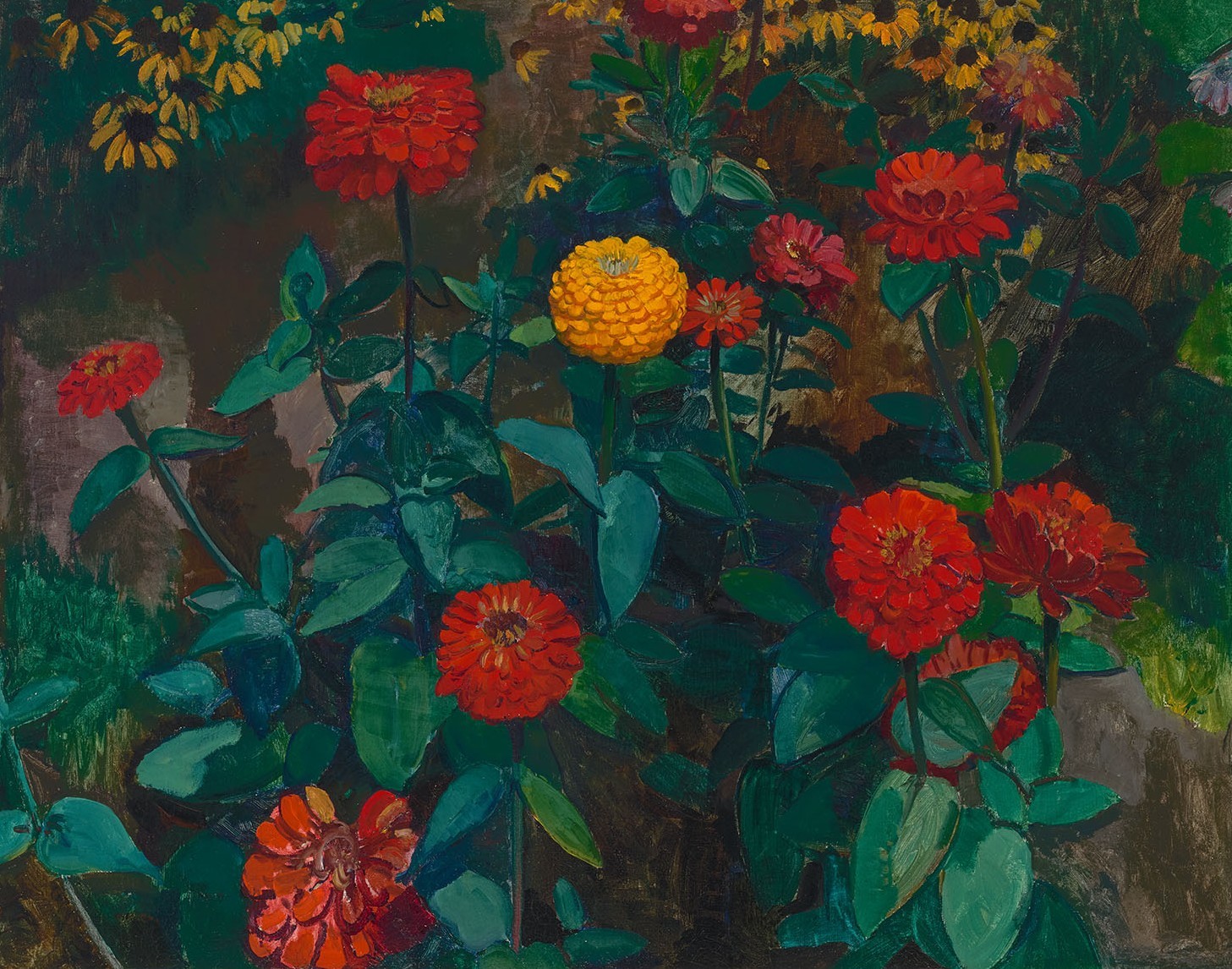
When Van Blaaderen settled in Bergen around 1915, his work underwent a significant transformation. He became a key figure in the Bergen School. His use of color grew darker and more earthy, his forms more simplified, and his contrasts more pronounced. The landscapes and village scenes from this period convey a sense of calm, strength, and monumentality.
Education and Early Career
Van Blaaderen was born on June 18, 1873, in Nieuwer-Amstel, into a well-to-do farming family. His talent for drawing was evident from an early age. At his father’s urging, he traveled to the United States (1892–1894) to study modern agricultural methods, but his ambition to become an artist never faded.
After returning, he studied at the School for Applied Arts in Haarlem (1894–1896). He then worked as an independent artist, producing still lifes and landscapes. In 1901, he attended the Academy of Fine Arts in Antwerp. A year later, he settled in Laren, where he found success with heathland scenes featuring rural figures.
Influences and Breakthrough
His contact with artists from the Gooi region, especially Ferdinand Hart Nibbrig, played an important role in his development. In 1906, he traveled to Italy. Around this time, he also met Maria Hoogendijk, whom he later married. Her family’s financial support allowed him to devote himself entirely to his art.
From 1907 onward, he worked in France, experimenting with lighter colors. Back in the Netherlands, he incorporated elements of Pointillism, visible in his refined brushwork. Through the Hollandse Kunstenaarskring, founded in 1913 by Leo Gestel, he became connected to the Bergen School.
Legacy
In 1918, Van Blaaderen moved to Bergen, where his style fully matured. He painted both Dutch and Southern European landscapes, leaving behind a diverse body of work.